Design a Basement Home Gym: Warm Floors, Lighting, Ventilation Tips
New year, new routine—without leaving home. If you live in Woodstock, Ontario or nearby communities like London, Kitchener-Waterloo, Cambridge, Brantford, St. Thomas, Ingersoll, Tillsonburg, Norwich, Aylmer, Dorchester, Burgessville, or Mount Elgin, a well-designed basement home gym lets you stay active through winter. Baird Construction specializes in basement renovations that balance performance, comfort, and safety—so your workout space feels warm, bright, and fresh even on the coldest January mornings.
What flooring is best for a basement home gym?
Basements need flooring that manages moisture, cushions impact, and resists wear. We recommend a layered approach: start with moisture control, add a warm subfloor, then finish with gym-friendly surfacing. Avoid bare concrete—it’s cold, hard on joints, and prone to condensation.
Warm, resilient flooring that works in Ontario basements
- Subfloor systems: Insulated panels or plywood over a vapour barrier reduce cold transfer and create a stable base. They also help protect finishes from minor moisture.
- Rubber tiles or rolls: Vulcanized, low-VOC rubber provides grip and shock absorption for lifting zones. Choose 8–12 mm thickness for general use; 15+ mm for heavy free weights.
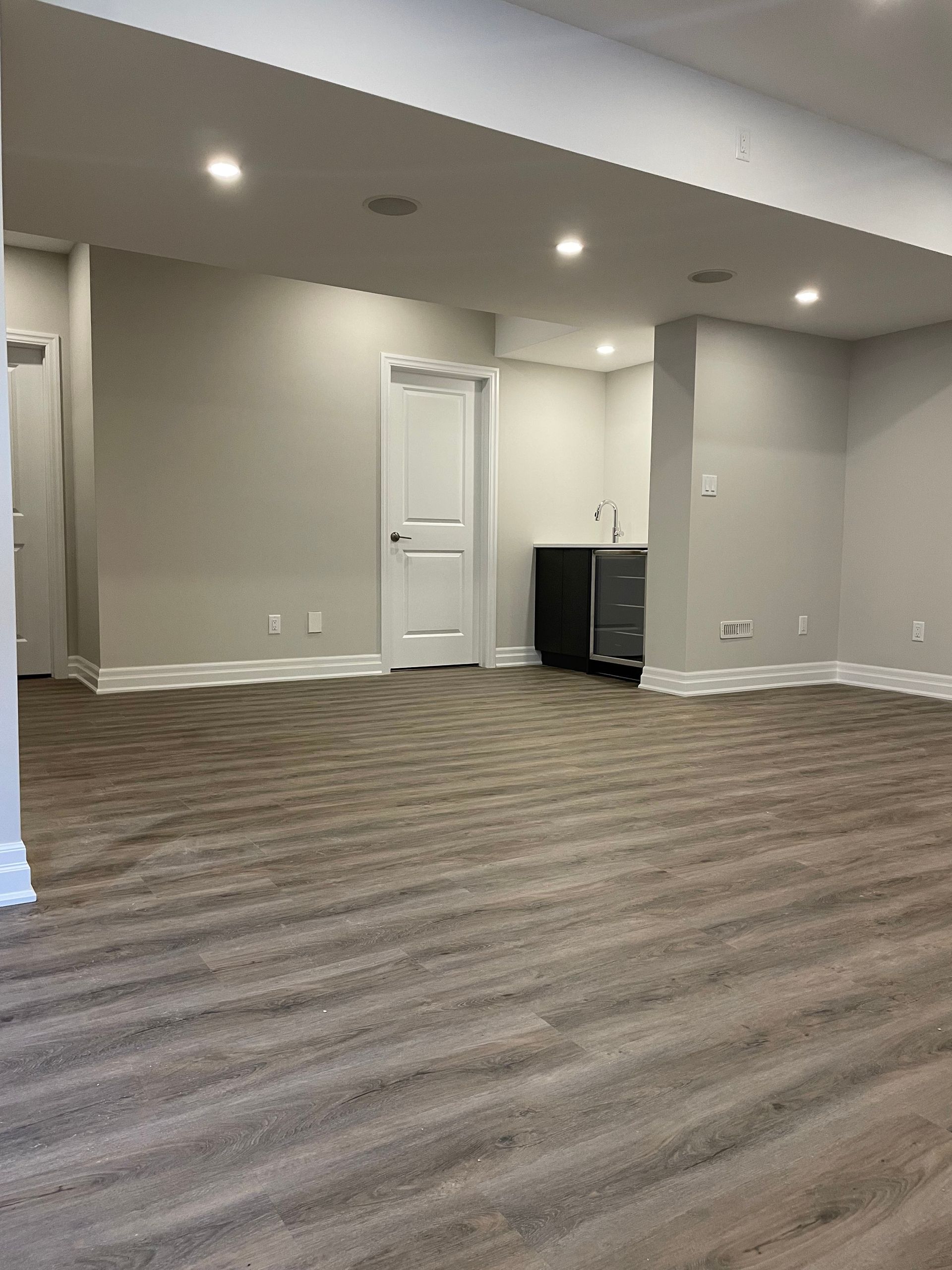
- Luxury vinyl plank (LVP): Durable, water-resistant, and easy to clean—great for cardio and stretching areas when paired with an underlayment.
- Foam tiles: Best for yoga or mobility zones, not for heavy equipment. Use selectively to avoid compression marks under treadmills or racks.
- Heated options: Electric radiant mats under LVP in stretching/yoga zones add winter comfort without overheating the room.
Lighting that energizes without glare
Basements often lack natural light, so a layered plan is key. Aim for bright, flicker-free LED light that makes movement safe and mirrors clear.
- General lighting: Recessed or surface-mount LEDs delivering 300–500 lux across the room.
- Task lighting: 500–750 lux at mirrors or lifting platforms; use wall sconces or adjustable track heads.
- Color temperature: 3500–4000K keeps the space crisp and alert without feeling harsh in winter.
- Glare control: Place lights slightly in front of mirrors to avoid hotspots; use diffusers and high-CRI fixtures for true color rendering.
- Controls: Smart dimmers or scenes for warm-up, lifting, and cooldown. Motion sensors in storage corners keep energy use low.
Ventilation and air quality for winter workouts
Elevated heart rates create heat and humidity. Good airflow prevents foggy mirrors and stale air—critical in sealed winter basements.
- HRV/ERV integration: Tie your gym into the home’s ventilation system for balanced fresh air without big heat losses.
- Dedicated exhaust: A quiet, timer-controlled fan (think high-CFM, low-sone) clears humidity after intense sessions.
- Filtration: Upgrade furnace filters (MERV 11–13) and consider a standalone air purifier for dust from rubber and chalk.
- Dehumidification: Maintain 40–50% RH to protect finishes and control odours.
- Fresh air intakes: Keep grilles clean and unobstructed; position registers to avoid direct drafts on treadmills or mats.
Acoustics, durability, and smart layout
Basements amplify noise. Design to keep peace upstairs and protect finishes.
- Sound control: Insulate joists, add resilient channel to ceilings, and use rubber underlayments under equipment.
- Wall durability: Add plywood backing behind drywall where you’ll mount racks, mirrors (tempered safety glass), or cable systems.
- Ceiling height: Plan for overhead presses, pull-ups, and jump rope—adjust equipment or choose low-profile fixtures where headroom is tight.
- Storage: Built-in cubbies and hooks for bands and mats keep floors clear and reduce trip hazards.
- Electrical, safety, and code in the Woodstock area
Gyms use multiple circuits. Treadmills and rowers prefer dedicated 15–20A circuits; add GFCI protection and in-use covers for any exterior-adjacent outlets. Mirrors and wall systems need secure fastening into blocking, and any new wiring requires ESA permits. If you’re adding a steam shower or adjacent bath, allow for ventilation, moisture-resistant finishes, and Ontario Building Code compliance. Baird Construction handles drawings, permits, and inspections for Woodstock, London, and Kitchener-Waterloo projects.
Design ideas Ontario homeowners love
- Zoned layout: Lifting on rubber, cardio on LVP, stretching on heated mat zones
- Beverage/charging station: Small counter with outlets and a mini-fridge
- Recovery corner: Foam roller storage, towel hooks, and a quiet fan
- Multi-use flexibility: Murphy rack or foldaway bench to open space for family use
Build your best winter workout space
A basement home gym designed for Ontario winters keeps you consistent and comfortable all year. From warm floors and bright, low-glare lighting to ventilation that keeps air fresh, Baird Construction will design and build a code-compliant space tailored to your goals. Book a free in-home consultation in Woodstock or nearby communities, and let our team deliver a durable, motivating gym—on time, on budget, and ready for your 2026 fitness plan.
Share This Blog